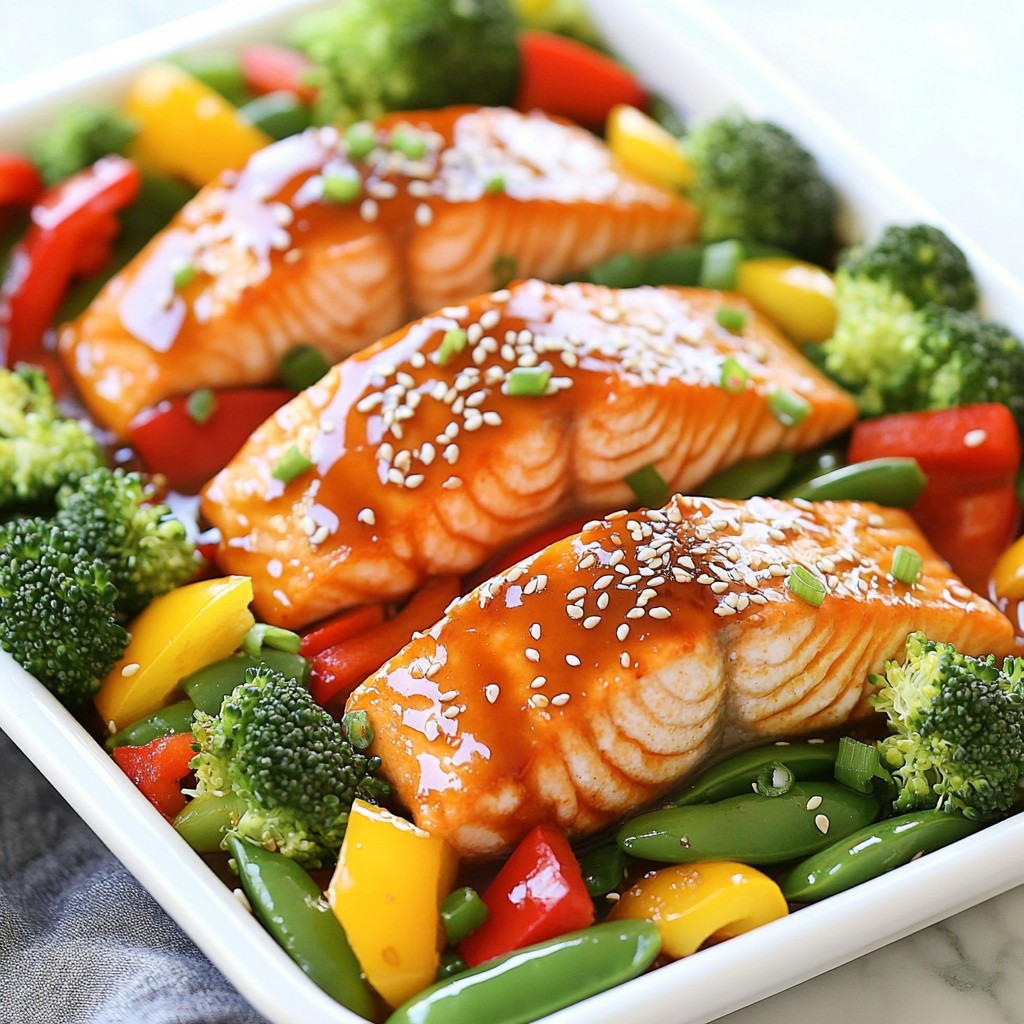
Ready for a quick and tasty dinner? This Teriyaki Salmon Sheet Pan Dinner is your answer! With just a few simple ingredients, you can create a meal that’s packed with flavor. Salmon fillets, fresh veggies, and savory teriyaki sauce come together seamlessly. Plus, everything cooks on one pan, making cleanup a breeze. Let’s dive into this delicious recipe and explore how to make your dinner stress-free and satisfying!
Why I Love This Recipe
- Quick and Easy: This recipe can be prepared and cooked in just 30 minutes, making it perfect for busy weeknights.
- One-Pan Wonder: With everything cooked on a single sheet pan, clean-up is a breeze, allowing you to enjoy your meal without the hassle.
- Healthy and Nutritious: Packed with protein from the salmon and a variety of colorful veggies, this dish is both nutritious and satisfying.
- Flavorful Teriyaki Glaze: The homemade or store-bought teriyaki sauce adds a deliciously sweet and savory flavor that complements the salmon and veggies perfectly.
Ingredients
Main Ingredients
- 4 salmon fillets (about 6 oz each)
- 1/4 cup teriyaki sauce (store-bought or homemade)
- 2 cups broccoli florets
- 1 cup bell peppers, sliced (red and yellow)
- 1 cup snap peas
Spice and Garnish
- 2 cloves garlic, minced
- 1 tablespoon fresh ginger, grated
- Sesame seeds for garnish
- Chopped green onions for garnish
Oil and Flavor Enhancers
- 2 tablespoons olive oil
- 1 teaspoon sesame oil
- Salt and pepper to taste
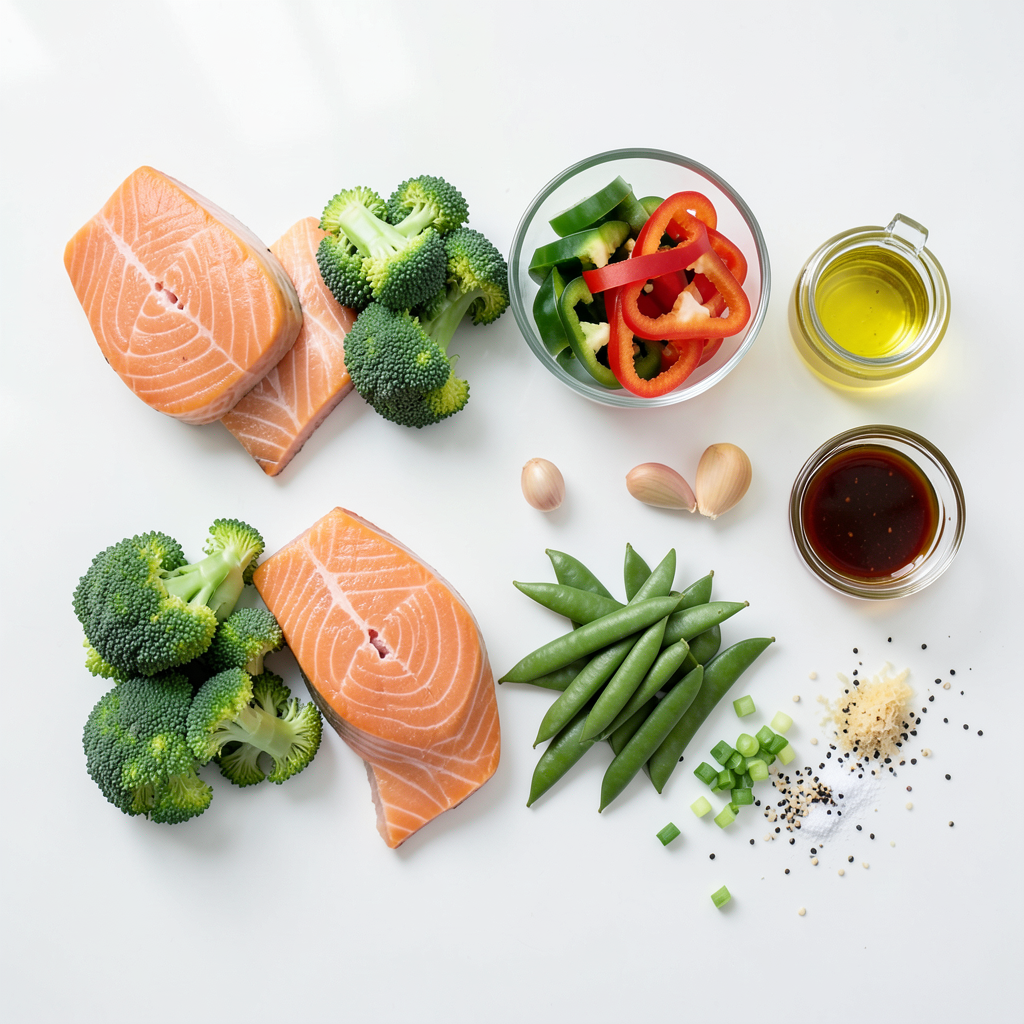
Gather these ingredients to make the teriyaki salmon sheet pan dinner. The main stars are the salmon fillets and teriyaki sauce. You can use store-bought sauce or whip up your own. Fresh vegetables add color and crunch. Broccoli, bell peppers, and snap peas work great here.
You also need garlic and ginger for a tasty kick. These spices will enhance the dish's depth. Don’t forget sesame seeds and green onions for the final touch. They add flavor and a nice look.
The oils play a key role too. Olive oil provides richness, while sesame oil adds a nutty taste. Make sure to have salt and pepper ready for seasoning. These simple ingredients come together to create a quick, flavorful meal.
Step-by-Step Instructions
Prepping the Oven and Sheet Pan
First, you need to preheat the oven to 425°F (220°C). This step is key for cooking everything evenly. Next, grab a large baking sheet and line it with parchment paper. This makes clean-up easy and helps prevent sticking.
Making the Teriyaki Mixture
In a mixing bowl, combine 1/4 cup of teriyaki sauce with 2 tablespoons of olive oil. Then, add 2 cloves of minced garlic, 1 tablespoon of grated ginger, 1 teaspoon of sesame oil, and a pinch of salt and pepper. Whisk all the ingredients together until they blend well. This mixture gives your salmon a rich flavor.
Arranging Ingredients on the Sheet Pan
Now, place 4 salmon fillets on one side of the prepared baking sheet. Brush each fillet with the teriyaki mixture. Save a little sauce for later. In another bowl, toss 2 cups of broccoli florets, 1 cup of sliced bell peppers, and 1 cup of snap peas with the rest of the teriyaki sauce. Make sure all the veggies get coated nicely. Spread the vegetables on the other side of the pan in a single layer.
Baking the Meal
Slide the sheet pan into the preheated oven. Bake for 15 to 20 minutes. Check the salmon by seeing if it flakes easily with a fork. The veggies should be tender and have a nice color. Once done, take it out and let it cool for a minute. You can garnish with sesame seeds and green onions before serving.
Tips & Tricks
Achieving Perfectly Cooked Salmon
To cook salmon just right, focus on timing and temperature. Preheat your oven to 425°F (220°C). Bake the salmon for 15 to 20 minutes. This cooking time works well for fillets around 6 ounces.
To check if your salmon is done, look for it to flake easily with a fork. The color should shift from bright pink to a light, opaque shade. If you see any translucence, it needs more time.
Enhancing Vegetable Flavor
For tasty vegetables, roasting works best. Toss the broccoli, bell peppers, and snap peas in the teriyaki sauce. Spread them evenly on the sheet pan. This helps them cook well and get nice caramelization.
You can also add salt, pepper, or a sprinkle of garlic powder for extra flavor. A squeeze of lemon juice after cooking can brighten their taste.
Serving Suggestions
Pair your teriyaki salmon with rice or quinoa for a filling meal. You can also serve it with a fresh salad or steamed rice for a great balance.
When it comes to presentation, arrange the salmon and veggies neatly on the plate. Garnish with sesame seeds and chopped green onions for a pop of color. A drizzle of teriyaki sauce on top makes the dish look even more appealing.
Pro Tips
- Use Fresh Ingredients: Always opt for fresh salmon and vibrant vegetables to enhance the flavor and nutritional value of your dish.
- Don’t Overcrowd the Pan: Ensure the vegetables are spread out in a single layer to allow for even cooking and caramelization.
- Check for Doneness: The salmon is perfectly cooked when it flakes easily with a fork and has an internal temperature of 145°F (63°C).
- Customize Your Veggies: Feel free to swap in your favorite vegetables or whatever you have on hand, such as zucchini or carrots, for a personalized touch.
Variations
Alternative Proteins
You can switch up the salmon for chicken or tofu. Chicken thighs work great here. They stay juicy and have great flavor. Just adjust the cooking time. For tofu, use firm or extra-firm. Cut it into cubes and coat it with the teriyaki sauce. This gives you a tasty, plant-based option.
If you want more seafood, shrimp is a fantastic choice. They cook fast and soak up the teriyaki flavor well. Just be careful not to overcook them. Cook shrimp until they turn pink and curl up, usually about 6-8 minutes.
Different Vegetables
Feel free to swap in your favorite veggies. Seasonal choices like zucchini, asparagus, or carrots add color and taste. You can also try root vegetables like sweet potatoes or beets. They will give a sweet and earthy flavor. Just cut them small so they cook evenly.
Mixing different vegetables keeps the meal exciting. You can use cauliflower, green beans, or even bok choy. Each adds its own unique twist to the dish.
Teriyaki Sauce Options
You can choose between homemade or store-bought teriyaki sauce. Making your own lets you control the flavors. Combine soy sauce, honey, and rice vinegar for a simple homemade version. Add garlic and ginger for extra flavor.
If you need a gluten-free option, use tamari instead of soy sauce. Many brands offer gluten-free teriyaki sauce, too. Always check the labels to ensure they meet your needs.
Storage Info
Storing Leftovers
To keep your teriyaki salmon fresh, use airtight containers. Glass containers work well, but plastic ones are fine too. Make sure to cool the dish before sealing. Store leftovers in the fridge for up to three days. This keeps the flavors bright and the salmon moist.
Reheating Instructions
For reheating, I recommend using the oven or a skillet. Set the oven to 300°F (150°C) and place the salmon on a baking sheet. Cover it with foil to keep moisture in. Heat for about 10 minutes. If using a skillet, add a splash of water and cover it. This helps to steam the fish and veggies, keeping them tender. Avoid using the microwave, as it can make the salmon rubbery.
Freezing Options
If you want to freeze it, wrap each portion tightly in plastic wrap. Then, place the wrapped salmon in a freezer bag. Make sure to remove as much air as possible. You can freeze it for up to three months. When ready to eat, thaw the salmon in the fridge overnight. This keeps the texture nice. You can then reheat it as mentioned above.
FAQs
Can I use frozen salmon for this recipe?
Yes, you can use frozen salmon. When cooking from frozen, you need to adjust the cooking time. Place the frozen fillets on the sheet pan and brush them with the teriyaki mixture. Bake them for about 25-30 minutes at 425°F (220°C). Make sure to check for doneness, as the salmon should be opaque and flake easily with a fork.
What can I substitute for teriyaki sauce?
If you don't have teriyaki sauce, you can use soy sauce with honey or maple syrup. This mix gives a sweet and salty flavor. You could also try hoisin sauce for a different taste, as it is thick and sweet. Each option changes the flavor profile, so choose one that fits your taste.
How do I know when the salmon is done cooking?
To know if your salmon is ready, look for a few signs. The salmon should change from a translucent color to an opaque one. It should flake easily with a fork when done. You can also use a food thermometer; it should read 145°F (63°C) in the thickest part.
Is this dish suitable for meal prep?
Yes, this dish is great for meal prep. You can cook it ahead of time and store it in containers. Let the salmon and veggies cool before sealing them. For best results, eat within three to four days. Reheat in the microwave or oven, but avoid overcooking to keep the salmon moist.
In this post, we explored how to make a tasty salmon teriyaki dish. We covered the key ingredients, like fresh salmon and seasonal veggies, and provided easy steps for cooking. I shared tips for perfectly cooked salmon and ways to enhance your vegetables. Remember, you can customize the dish with different proteins and sauces.
Focus on using fresh ingredients for the best taste. Enjoy this meal with friends or family, and feel free to experiment with new flavors!