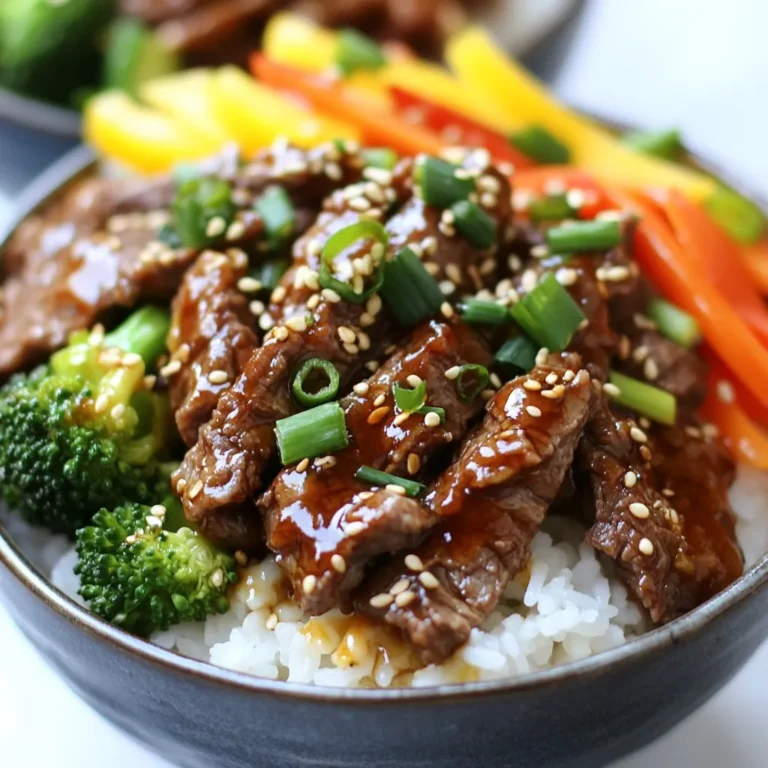
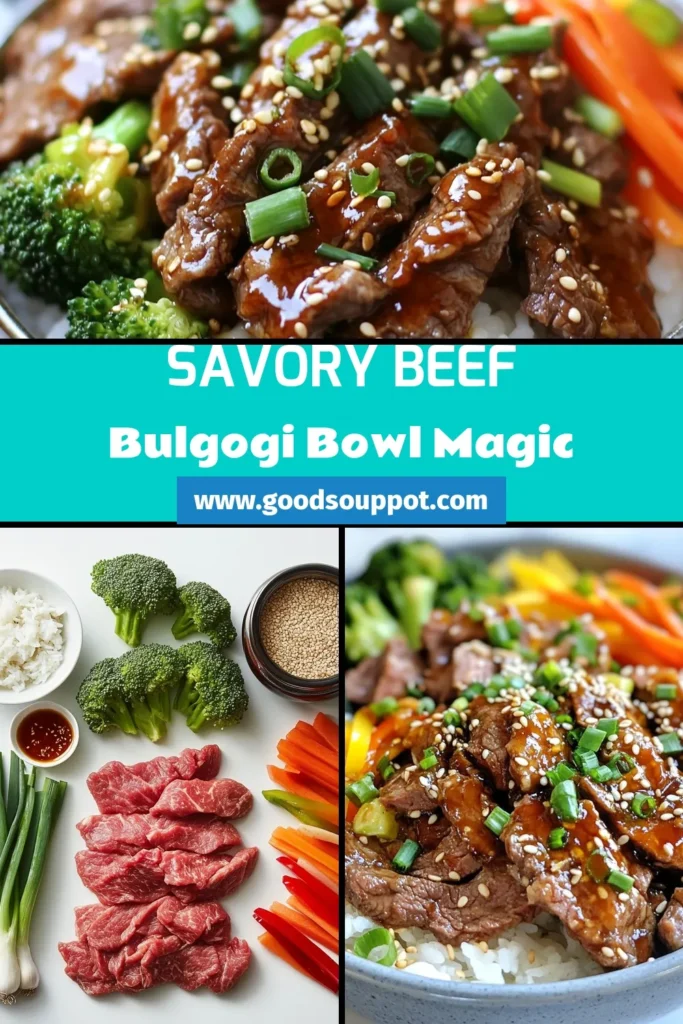
Craving a quick and tasty meal? Beef Bulgogi Bowls combine savory marinated beef with fresh veggies and fluffy rice. It’s not just flavorful; it’s also easy to make! You’ll find everything you need, from the key ingredients to simple cooking tips. Get ready to impress your taste buds with this colorful and satisfying dish. Let’s dive into the steps for creating your own delicious Beef Bulgogi Bowls!
Why I Love This Recipe
- Delicious Flavor Profile: The combination of marinated beef with the sweet and spicy notes of gochujang creates a mouthwatering dish that is sure to satisfy.
- Quick and Easy: This recipe comes together in less than an hour, making it perfect for busy weeknights without sacrificing flavor.
- Customizable Ingredients: Feel free to swap in your favorite vegetables or adjust the spice level to suit your taste, making it versatile for any palate.
- Beautiful Presentation: These colorful bowls not only taste great but also look stunning on your dinner table, making mealtime special.
Ingredients
Main Ingredients
- 1 lb beef sirloin, thinly sliced
- 2 tablespoons soy sauce
- 1 tablespoon sesame oil
- 1 tablespoon brown sugar
- 3 cloves garlic, minced
- 1 inch ginger, grated
- 1 tablespoon gochujang (Korean chili paste)
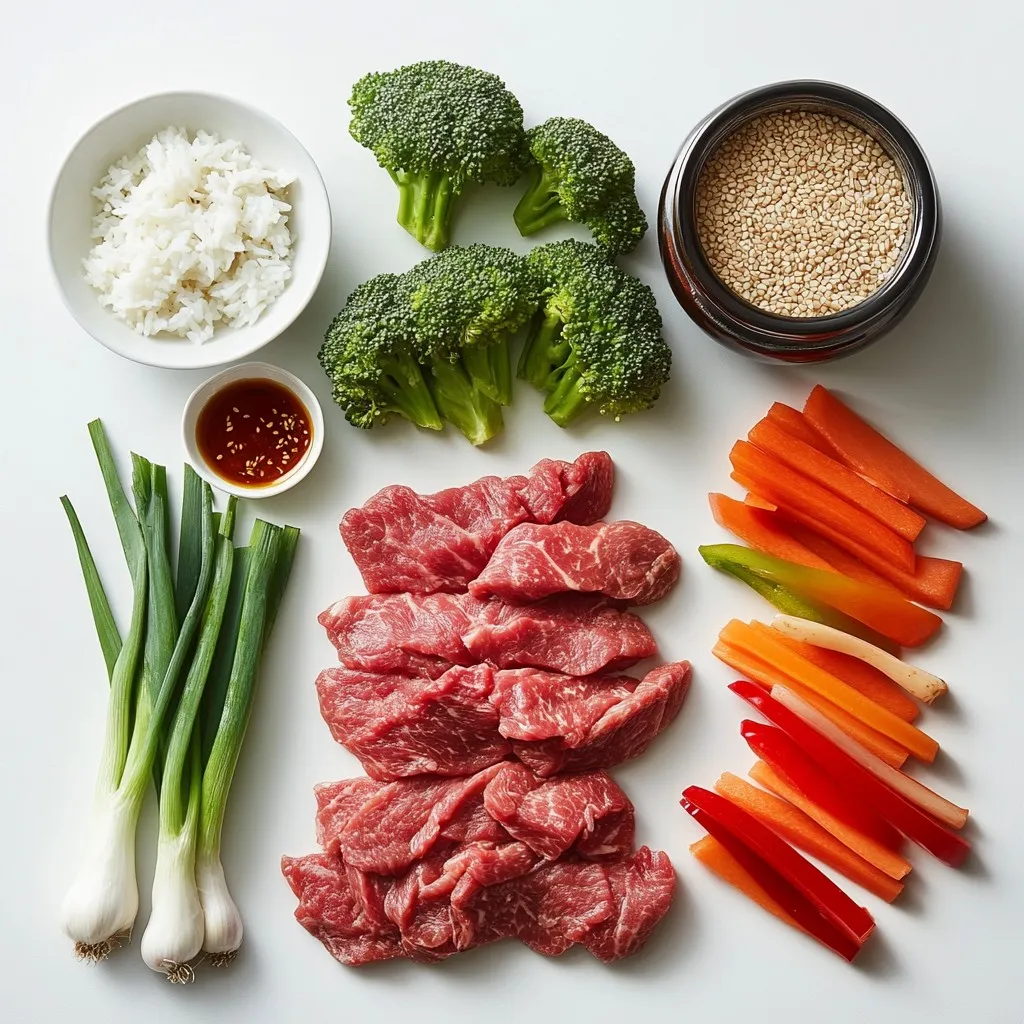
For the base of your beef bulgogi bowls, start with beef sirloin. This cut is tender and perfect for quick cooking. You will also need soy sauce, sesame oil, and brown sugar to create a rich marinade. Garlic and ginger add depth to the flavor. Gochujang gives the dish a spicy kick.
Vegetables
- 1 carrot, julienned
- 1 bell pepper, thinly sliced
- 1 cup broccoli florets
- 2 green onions, chopped
- Sesame seeds for garnish
Next, grab some fresh vegetables. Choose a carrot, a bell pepper, and broccoli. These add color and crunch to your meal. Green onions provide a nice finish, while sesame seeds add a lovely texture.
Serving Components
- 2 cups cooked jasmine rice
- Optional garnishes and sides
For serving, you will need jasmine rice. This soft and fragrant rice makes a great base. You can also add optional garnishes like kimchi for an authentic touch. Using colorful bowls can make your meal look even better.
Step-by-Step Instructions
Marinating the Beef
To start, you need to mix the marinade. In a large bowl, add:
- 2 tablespoons soy sauce
- 1 tablespoon sesame oil
- 1 tablespoon brown sugar
- 3 cloves garlic, minced
- 1 inch ginger, grated
- 1 tablespoon gochujang
Stir these ingredients until they blend well. Next, add 1 pound of thinly sliced beef sirloin. Make sure every piece gets coated. You want the flavors to soak in. Let this marinate in the fridge for at least 30 minutes. This wait helps the beef become tasty and tender.
Preparing the Vegetables
While the beef is marinating, you can prepare the veggies. For the carrot, use a peeler to remove the skin. Then, cut it into thin matchstick shapes. This technique is called julienning. For the bell pepper, cut it in half, remove the seeds, and slice it thinly.
Now, for the broccoli, cut it into small florets. Make sure they are not too big. This helps them cook evenly. Set all these veggies aside until you are ready to cook.
Cooking the Beef and Vegetables
When the beef is done marinating, heat a large skillet or wok over medium-high heat. Add the marinated beef into the hot skillet. Discard any extra marinade left in the bowl. Sauté the beef for about 4-5 minutes. You want it to brown and cook through.
After the beef is ready, it’s time to add the vegetables. Toss in the julienned carrot, sliced bell pepper, and broccoli florets. Stir-fry everything for about 3-4 minutes. You want the veggies to be tender but still bright and crunchy. This cooking method keeps the dish fresh and flavorful.
Tips & Tricks
Marination Tips
For the best flavor, marinate the beef for at least 30 minutes. You can also marinate it overnight. This gives the beef time to soak up the flavors. If you want a twist, try using a mix of orange juice and soy sauce as an alternative marinade. It adds a nice sweetness.
Cooking Techniques
When stir-frying the beef, make sure your skillet is hot. This helps to sear the beef quickly. Cook the beef for about 4-5 minutes. You want it to be browned but not dry. The beef is done when it is no longer pink in the middle. Keep an eye on it to avoid overcooking.
Presentation Tips
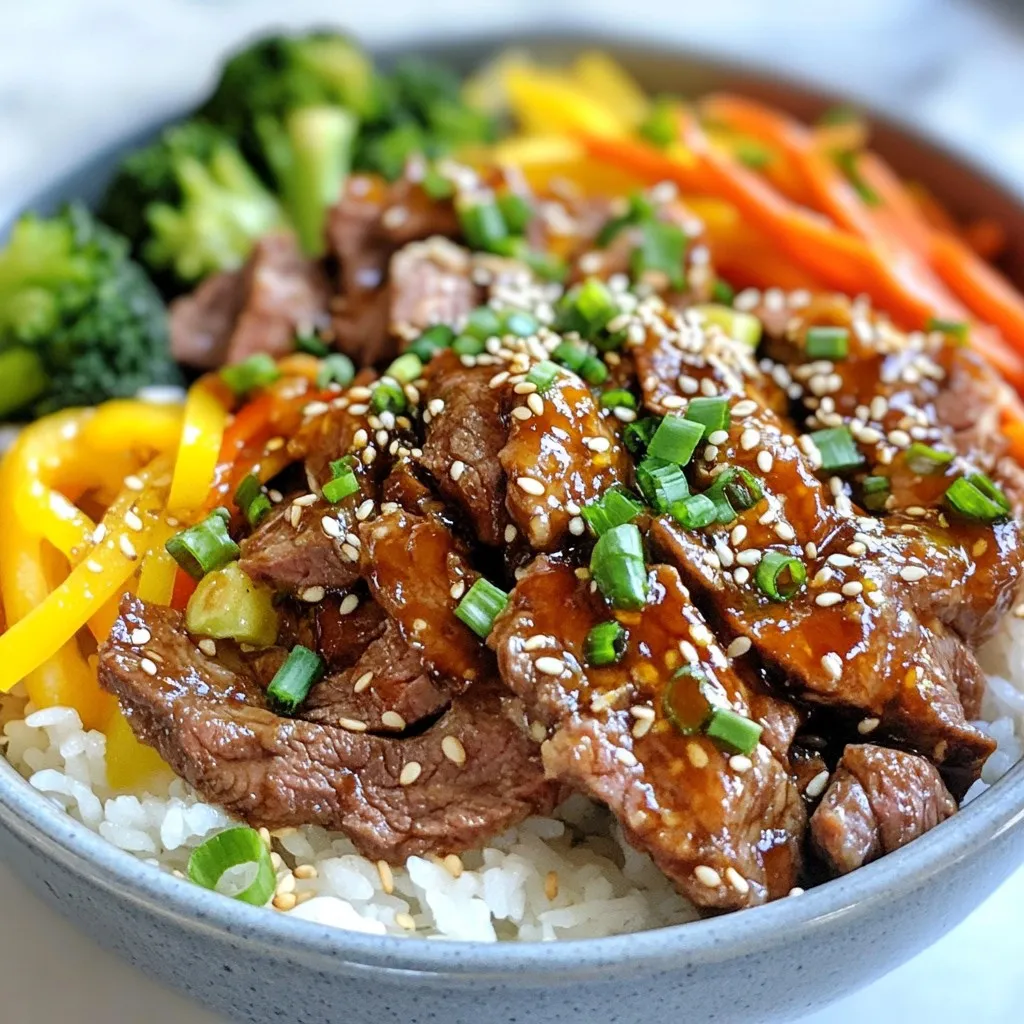
For a great look, serve your bulgogi in colorful bowls. A bright bowl makes the dish pop. Start with a scoop of jasmine rice, then add the beef and veggies on top. Finally, sprinkle green onions and sesame seeds for extra flair. You can also add a side of kimchi for a nice touch.
Pro Tips
- Marinate Longer for Flavor: For a more intense flavor, marinate the beef for 1-2 hours or even overnight in the refrigerator.
- Use Fresh Ingredients: Fresh vegetables not only enhance the dish’s flavor but also add a vibrant color to your beef bulgogi bowls.
- Adjust Spice Level: If you prefer a milder dish, reduce the amount of gochujang or substitute it with a milder chili paste.
- Perfectly Cooked Vegetables: To ensure your vegetables remain crisp, add them to the skillet just after the beef is cooked and stir-fry quickly.
Variations
Ingredient Substitutions
You can switch up the protein in Beef Bulgogi Bowls. Chicken works well and cooks quickly. Tofu is a great choice for a vegetarian option. It absorbs flavors nicely, making it a tasty alternative.
Flavor Adjustments
You might want to tweak the spice level. Gochujang adds heat, but you can use less if you prefer milder flavors. If you want more depth, try adding sesame seeds or a splash of rice vinegar. These can elevate the taste of your dish.
Serving Suggestions
Pair your beef bowls with fresh sides like kimchi or pickled veggies. They add crunch and tang. You can also create fun bowl combinations. Try adding avocado or mango for a sweet twist. Mixing in different grains like quinoa or brown rice can change the texture too.
Storage Info
Leftover Storage
To keep your leftover beef bulgogi fresh, first let it cool. Place it in an airtight container. Store it in the fridge. This helps keep flavors strong. You can safely eat it for up to three days. If it smells or looks off, throw it away.
Reheating Instructions
When it’s time to enjoy your leftovers, there are a few good ways to reheat beef bulgogi. You can use a skillet over medium heat. Add a splash of water or broth to keep it moist. Stir it often until hot. The microwave is also quick. Just cover your bowl and heat in short bursts. Check and stir every 30 seconds. This keeps the flavor intact.
Freezing Guidelines
You can freeze beef bulgogi if you want to save it for later. Freeze it right after cooking. Use a freezer-safe container. For best quality, consume it within three months. To thaw, place it in the fridge overnight. You can reheat it in a skillet or microwave after thawing. If you freeze marinated beef, the same rules apply. Just remember to cook it fully after thawing.
FAQs
What is Beef Bulgogi?
Beef bulgogi is a popular Korean dish. It features marinated beef that you grill or stir-fry. The name “bulgogi” means “fire meat.” Traditionally, you use thin slices of beef, often sirloin.
Common ingredients include:
- Beef sirloin
- Soy sauce
- Sesame oil
- Brown sugar
- Garlic
- Ginger
- Gochujang (Korean chili paste)
These ingredients give bulgogi its sweet and savory flavor. The beef soaks up the marinade and becomes tender and delicious.
Can I make Beef Bulgogi in advance?
You can make beef bulgogi ahead of time. This saves time on busy days. For meal prep, marinate the beef the night before. This allows flavors to blend well.
For storage, place the marinated beef in an airtight container. Keep it in the fridge for up to 2 days. If cooked, store leftovers in the fridge for up to 3 days.
Is Beef Bulgogi gluten-free?
Beef bulgogi can be gluten-free. Traditional soy sauce contains gluten, but you can use gluten-free soy sauce. Look for tamari or coconut aminos as good alternatives. These options keep the dish tasty without gluten.
Beef Bulgogi is a flavorful dish that shines with its simple ingredients and easy steps. You learned how to marinate beef, prepare vibrant veggies, and cook them to perfection. With hints on presentation and variations, you can tailor this dish to your taste. Remember, whether you opt for chicken or tofu, the key is in the marinade. Store leftovers properly so you can enjoy them later. Dive into this recipe, and enjoy every delicious bite you creat
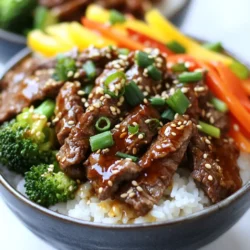
Savory Beef Bulgogi Bowls
Ingredients
- 1 lb beef sirloin, thinly sliced
- 2 tablespoons soy sauce
- 1 tablespoon sesame oil
- 1 tablespoon brown sugar
- 3 cloves garlic, minced
- 1 inch ginger, grated
- 1 tablespoon gochujang (Korean chili paste)
- 1 unit carrot, julienned
- 1 unit bell pepper, thinly sliced
- 1 cup broccoli florets
- 2 unit green onions, chopped
- 2 cups cooked jasmine rice
- to taste unit sesame seeds for garnish
Instructions
- In a large bowl, combine soy sauce, sesame oil, brown sugar, minced garlic, grated ginger, and gochujang. Mix well, then add the thinly sliced beef. Ensure the beef is well-coated and let it marinate in the refrigerator for at least 30 minutes.
- While the beef is marinating, prepare the vegetables by slicing the carrots, bell pepper, and broccoli. Set them aside.
- Heat a large skillet or wok over medium-high heat. Add the marinated beef (discard any excess marinade) to the hot skillet. Sauté for about 4-5 minutes until the beef is browned and cooked through.
- Once the beef is cooked, add the carrot, bell pepper, and broccoli to the skillet. Stir-fry for an additional 3-4 minutes until the vegetables are tender but still vibrant.
- In bowls, start by adding a generous scoop of jasmine rice. Top with the beef and vegetable stir-fry.
- Sprinkle chopped green onions and sesame seeds over each bowl for added flavor and crunch.
